AI for Seniors: Beyond the Basics
Move from first experiments to projects, planning, information checks, and organized files.
A Beginner’s Guide to Using AI with Confidence for Everyday Life
Who this is for Older adults beginning to explore AI, and family members helping them get started.
Curious about AI and unsure where to begin? This introductory guide is written for older adults who want a practical, approachable way to get started.
Use an ordinary conversation to explain what you want, add useful context, ask follow-up questions, and check the result. The book demonstrates everyday tasks such as choosing a hobby, finding a restaurant, planning a trip, and getting started in a new community. The exercises do not require a paid AI plan.
Links open Amazon.com for the selected edition. Check Amazon for current price and availability.
Tap a page to open a larger view.
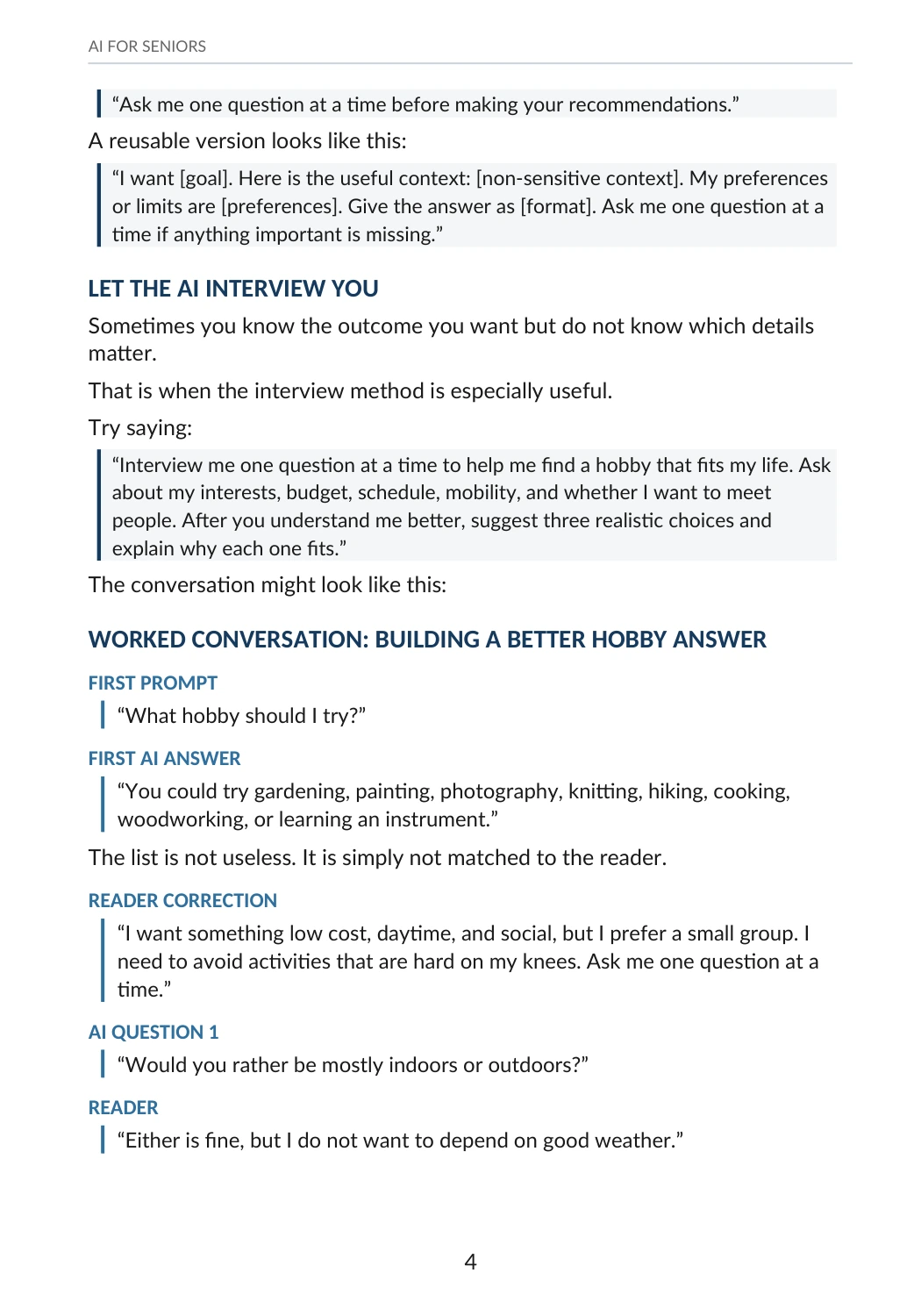
Ask me one question at a time before making your recommendations.
No. This is the beginner book in the series. It starts with ordinary conversations, useful context, follow-up questions, and checking the result.
No paid plan is required for the exercises in this beginner book. It recommends starting with a legitimate free option. Current product features and limits can change.
Ask the assistant to interview you one question at a time before making suggestions. You supply relevant preferences and limits, correct its assumptions, and choose the next real-world step.
Move from first experiments to projects, planning, information checks, and organized files.
Turn useful AI projects into repeatable workflows you can review, pause, and improve.